
The Industry Kept Changing. We Kept Making Movies; FilmStack 1:1 Featuring Joshua Caldwell and Jeremy Redleaf
Two college roommates who've weathered the entertainment industry for twenty years sit down for the first time to talk about it.


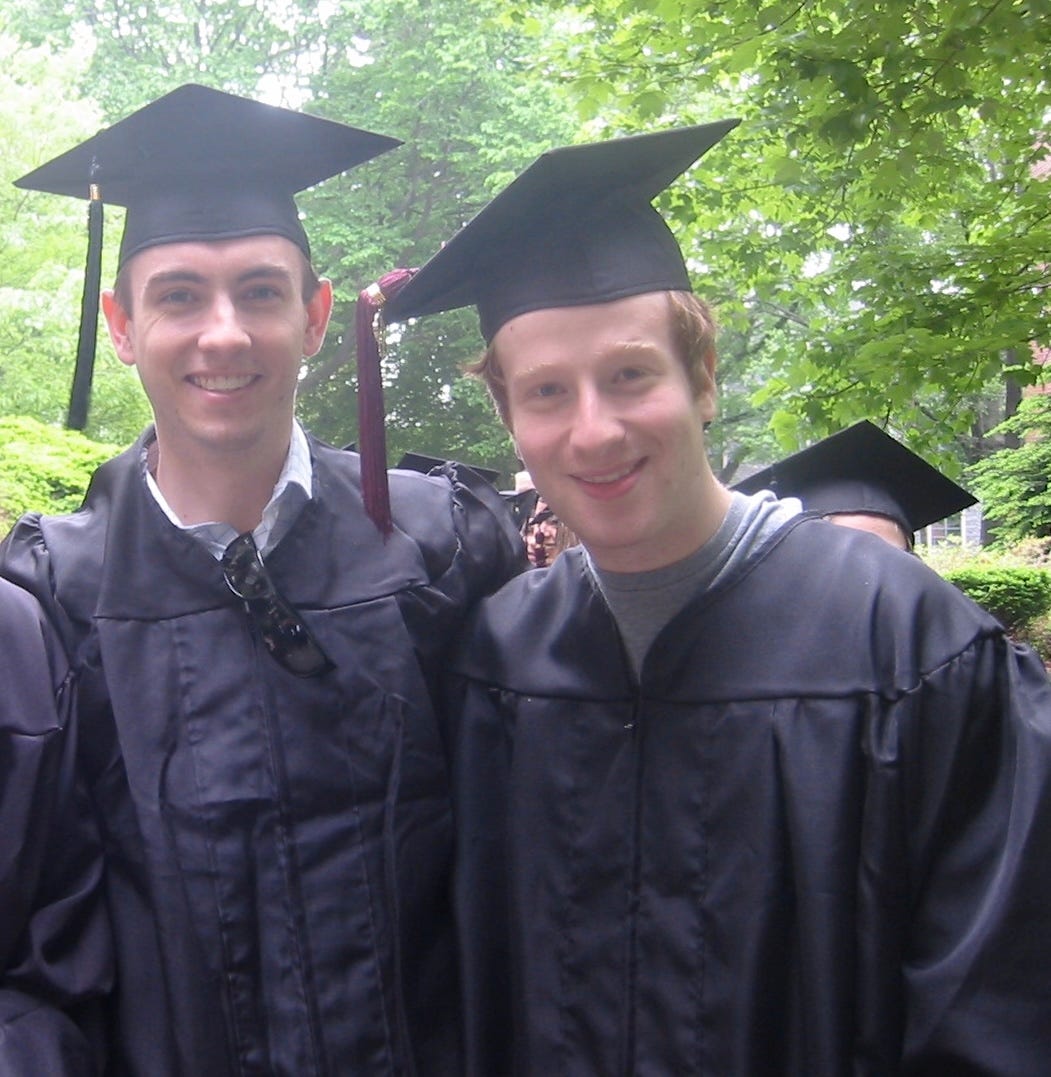
Jeremy Redleaf and Joshua Caldwell were college roommates at Fordham at Lincoln Center, bonding over the auteurs of the aughts and mapping out their eventual ascent up the Hollywood ladder. Then, in their senior year, Google acquired a website called YouTube.com. A new era was about to begin. The ladder was about to fall.
Prosumer tools like iMovie, Final Cut Pro 7, and the Panasonic AG-HVX200 were collapsing the barriers to filmmaking. Young people were moving their lives online, hungry for new kinds of content. The industry, sensing a shift, began courting entrepreneurial young voices — and Redleaf and Caldwell were positioned to catch the wave. Caldwell won the inaugural student filmmaker category at the MTV Movie Awards, MTVu’s Best Film on Campus Award. Redleaf took home an early Streamy Award and a development deal with Fox Television Studios. Both had every reason to believe this new fast track would deliver.
But what followed were two decades of momentum and stall, opportunity and contraction, death and reinvention, the industry reshaping itself faster than anyone could keep up with. But through it all, they’ve continued to make new work. They currently find themselves both in post-production on new feature films, as the industry is once again being remade from the outside in. They sat down together for the first time to make sense of it all.
Transcript edited for clarity.
REDLEAF: Here’s how I will set this up, friend. We were college roommates and my first memories of you are being so focused and committed to the projects you were making. Not caring at all about what was going on at college.
CALDWELL: I missed out on a lot.
REDLEAF: You missed out a lot, but I learned something from it, which is the important part. I just have to believe that it really impacted what I thought this process takes. The word “devotion” has been coming up a lot with my new movie. Like just the sheer devotion it requires to make something that you care about or when you don’t have enough money. Just the feeling of like, “I have a relationship with this thing and I’m choosing this thing over other things.”
CALDWELL: Right.
REDLEAF: It’s very present for me right now. And that’s my first memory of you is being that guy in college…
CALDWELL: Choosing this thing over the other things, haha.
REDLEAF: Yeah. But, you could tell me about what it was about, but it seemed like it came from passion? You weren’t getting a grade on any of it.
CALDWELL: Even to today, I just love doing it. I love being on set. I love making stuff. I love having, I hesitate to use the word ‘purpose,’ but sort of something that I’m driven towards. Whether it’s a movie or a career or something like that. But I just love doing it. It’s just like the greatest thing in the world is to be on set, creating something, or to be out shooting on my own.
So that was part of it. It never feels like work. And sure it’s stressful and you go through stuff, but it never feels like I don’t want to be doing this. I’m always like, “This is the best thing to be doing for me right now.” And I felt that even in college, and that was also coupled with the feeling that it is so hard to break into the industry that I just felt, because this is what I love to do and what I want to do, I’m just gonna commit everything to it, within reason.
But really commit to and take advantage of this time because I’m gonna get out of college and have to earn a paycheck. And it’s probably not gonna be — I thought maybe it would be for movies right away, but yeah, realistically you go, I’m gonna have to have something that’s really gonna be — I’m not gonna have time later. So let’s take advantage of time now.
REDLEAF: Well, that culminates in the second memory I have of you, which is when you were trying to win the Golden Popcorn for The MTV Movie Awards and we ran a click farm in our dorm room. [The winner was determined by audience choice.]
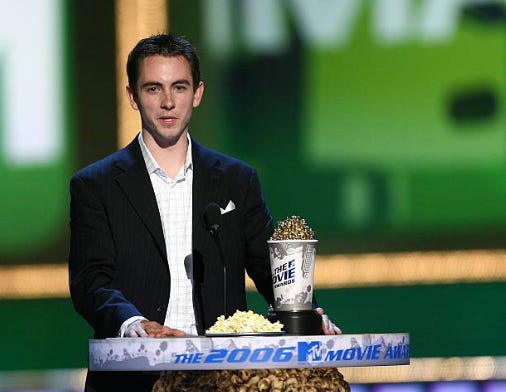
CALDWELL: You talk about missing out on things. I spent the last month of college, my college career, sitting in our dorm room with two, three computers going, just clicking.
REDLEAF: We started in that same dorm room together. We’ve been along the ride in interesting ways where we’re at the same point sometimes and different points other times. Right now we’re in a similar boat— we both just made a movie we’re in post with. But I realize that we’ve never really talked about it in any depth. We’ll catch up and we’ll mention things, but we’ve never actually talked about it. And maybe at some point it felt competitive or intimidating to do so. But now that we’re old guys, I think it would be really interesting to actually talk about it because, as you’ll find out, you have been present to many different moments in my career in a way that nobody else has. And I probably wouldn’t have — this movie wouldn’t have started to germinate if we didn’t run into each other in a really random way, which we can get into later.
I was thinking about your path, and something that came up for me was this feeling like there’ve been several times where things have come out of nowhere. Like whether you felt like all was lost, or just moments of pure like, this happened and there was no — it came out of nowhere. I don’t know if that resonates for you, but what is your relationship to that luck or serendipity? And just to make it specific — tell me if I’m remembering this wrong, but you got into fly fishing and then someone randomly called your manager about a fly fishing movie, and that became Mending the Line. I’m sure there are others I’m not thinking of, but what’s your relationship to that sort of randomness that happens in this business sometimes?
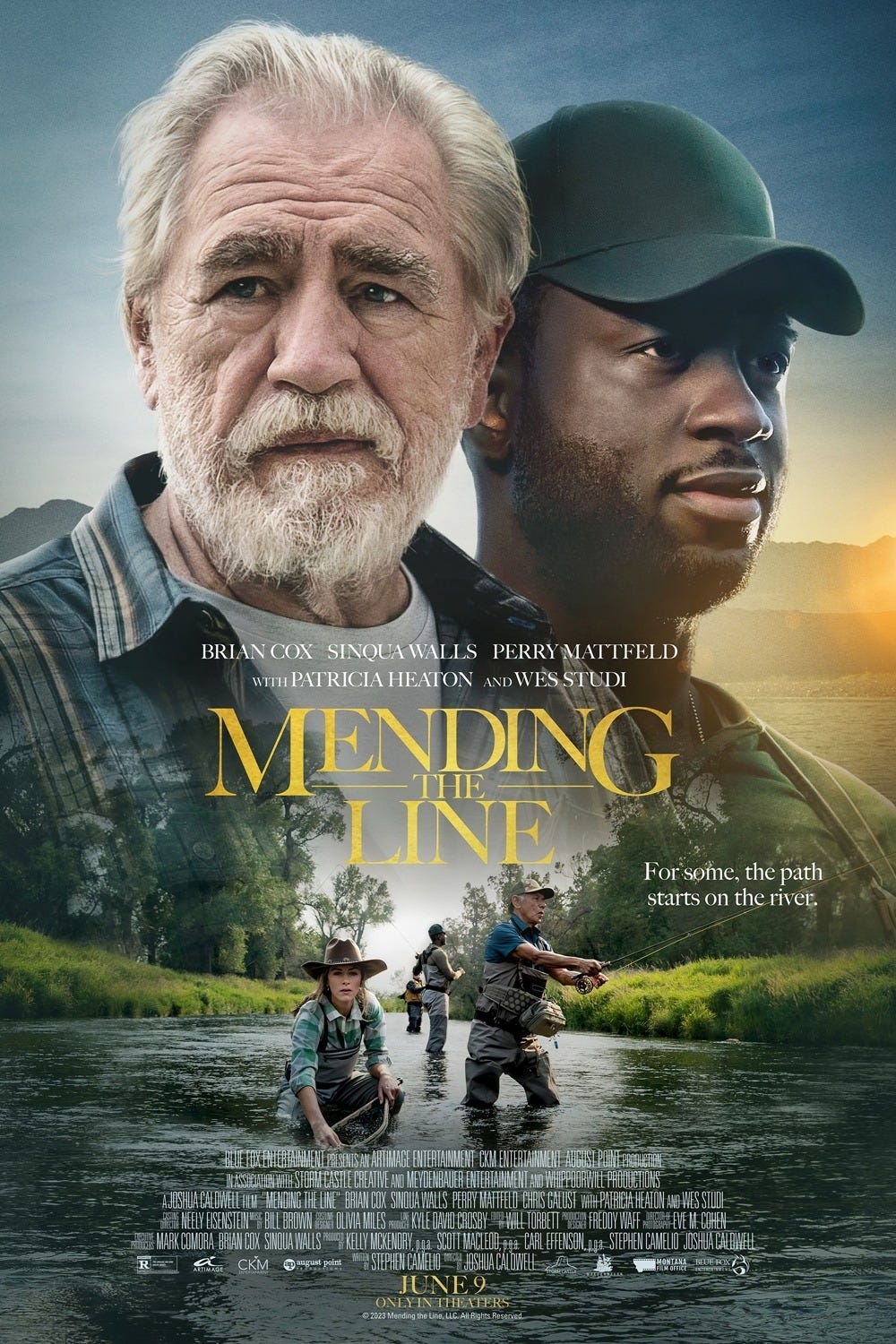
CALDWELL: I mean, it’s super frustrating, it’s the most frustrating thing in the world because you want to feel like you have influence over what your career is like and what you’re doing. And the things I’ve had influence over have not always been the thing that ended up like getting made. And, and it’s also very weird to think that had my manager not produced a mockumentary that took place in Montana but did not shoot in Montana, he probably never would’ve even gotten the phone call about Mending the Line to begin with. That’s the weird part — even if I was a fly fisherman, if he hadn’t made that movie, I don’t know if Mending The Line would’ve ever come to me. But I think that’s also the beauty of it. With Mending, when something shows up and everyone you talk to is like, “Oh, you also wrote that?” and you’re like, “No, I had nothing to do with it. It just sort of appeared.” I’ve always believed I would have a career where I controlled the direction of it. That I would make the movies that I really wanted to make. And of late, I’ve tried to be more accepting of that not being the path for me, and making sure that I recognize and take advantage of opportunities that are brought to me, as opposed to me trying to create them.
And so it’s been a kind of career shift — not so much an outward facing one, as much as an internal shift in terms of how I think about the career and what I’m doing. It’s maybe something I never wanted, but it sort of is what it is.
And I think that’s what’s interesting about the filmmaking business — there’s no ladder, there’s no one way to do it. It’s really different for everybody. And I have a belief that a lot of times, friction in people’s lives comes from a desire for things to not be the way they are.
REDLEAF: Sure.
CALDWELL: When you’re fighting against that current — just to pull a river metaphor into it — it’s really difficult and hard. But if you’re willing to go along with what that current’s bringing you, it’s a super easy ride. And so I’ve tried to be a little more open to, “Oh, it’s a satire comedy opportunity — hey, let’s do it.” Instead of being like, I can’t, because of some preconceived idea of what kind of filmmaker I am.
REDLEAF: You’re more receptive to what appears on the plate.
CALDWELL: Yeah. It took me 20 years to get there, but it’s finally coming around.
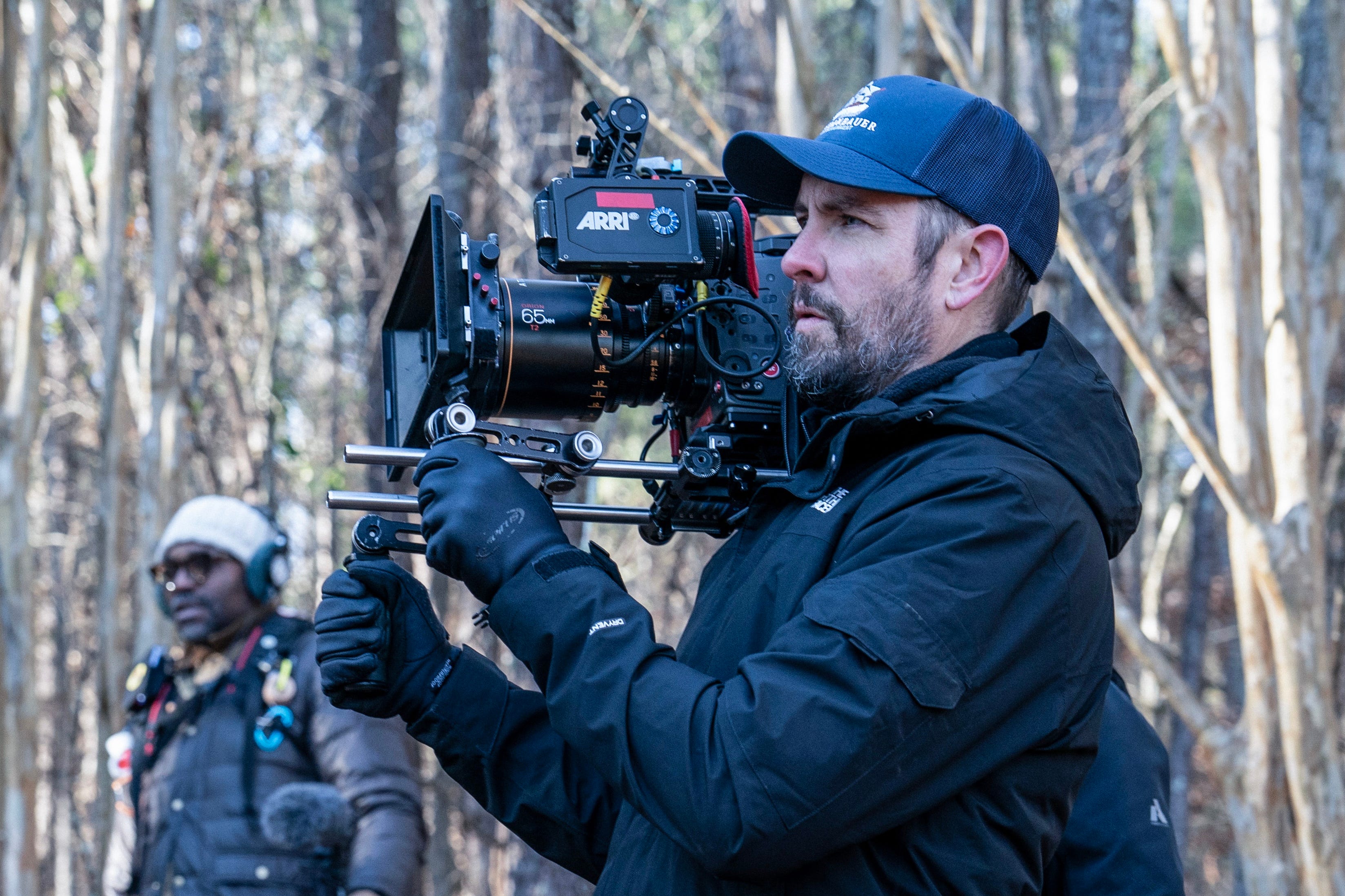
I’m curious, because I knew I wanted to direct films since high school, but when I met you, you were primarily focused on acting. Was it always there? What led to that desire to write, direct, play more in that space rather than limiting yourself just to acting?
REDLEAF: I was getting into editing in college. That was sort of the beginning of [pro-sumer] non-linear. I think iMovie just came out when we were in college. I was just discovering that editing was very relaxing and interesting and stimulating for me. The genesis was pretty specific — I was working as an actor, it was going well, but I was dating somebody older than me, and I just felt this pressure to start manifesting opportunities. YouTube was becoming a thing, web content. I was just at the right age and place where I was like, “Why don’t we go make a little series?” I’d just done my first movie as an actor. I knew Devin Ratray from that movie, and I knew Alexandra Daddario from doing a thing for ABC — what if we just got together and did a thing for 500 bucks? That really changed my career and life and put me on this wild path. It blew up more than anything I’ve ever done since. Truly just made a thing for 500 bucks that took on a life of its own.
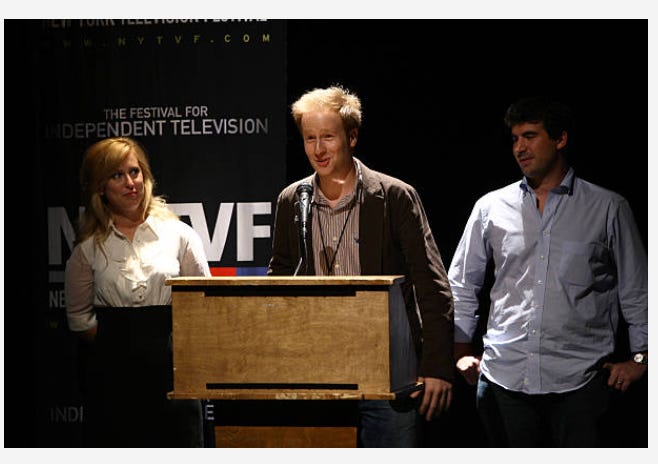
And I didn’t even consider myself a writer — people were starting to, I won “Best Writing” at some big festival and I was like: “Guys, I’m not a writer.” But slowly I allowed myself to adopt that adjective. And ultimately it was just feeling like I have a lot of different skills, and I felt a lot more activated when I was on the other side of things. For a while I tried to do both at the same time, but that’s very fraught. So I mostly stay on the creative side these days.
I think it was very particular to the circumstances of my life and where the internet was at that exact moment. There was a time before TikTok, kids, where people made web series and the industry really saw it as the great incubator.
CALDWELL: I remember Odd Jobs. From my perspective, what was so funny about it was I came out to LA really focused on features, which ended up becoming a longer-term process. But I remember looking at you with envy — Odd Jobs was taking off, you were getting all these meetings.
REDLEAF: –That I didn’t deserve—
CALDWELL: —But I don’t think “deserve” is even a thing, because if you make something that catches on, you are deserving. I remember being like, man, that guy — but also being very happy that stuff was catching on.
And it’s sort of leading to that thing where you think it’s gonna be the story, right? Like, oh, I won an MTV Movie Award, my career is set.
REDLEAF: Yeah.
CALDWELL: And that ends up not being the case. At the time, looking back on it I can recognize it, but at the time it was a real bitter pill to swallow — I’d had this really cool thing happen and nobody seemed to care and it didn’t lead to anything.
And I know for you, with Odd Jobs and all the attention you were getting, you were thinking it’s gonna turn into something. And then checking in with you over the years — it went here and then it didn’t turn out. So was it a similar thing where you get anointed for a moment, you try to convert, and it just doesn’t turn into anything real, and then you realize — all right, back to the hustle.
REDLEAF: Yeah, for sure. I spent a lot of years developing shows that didn’t sell, taking Odd Jobs out with different showrunners, I even tried to sell a reality version of it. I spent 10 years chasing this version of a career that people kept saying could be yours if you stay on this track.
CALDWELL: Keep doing the free work.
REDLEAF: Yeah. And no one at any point really cared about “What’s in your soul, or what do you wanna say?” It was all based on “Yeah, we can sell that idea, or that seems like something people would buy.” And a young person, until they realize that the reps don’t have the answers and can’t be fully trusted — it’s a very dangerous situation to just be like, “You should make a show about nut farmers, I can sell that.” Okay, I’ll spend the next six months writing that.
I just had so many of those experiences. And then at some point I saw you go out and make a no-budget feature, and it was a sort of boomerang of like — look at that guy, he just went and made it! And I’d seen everything you’d done until that point, and I was like, that’s the best thing you’ve ever done. You just went and did it. And I was so happy to see that open doors for you.
CALDWELL: Yeah. I guess it works for some people — write the Nut Farmer show, sell it. But I’ve just never had success with that. I’ll find five projects I’m working on because I heard a certain format works, but nothing’s really stuck that way. The stuff that’s worked is what I go make because I really want to make it.
REDLEAF: Some people shine on the page. I don’t know — I’ve told myself I really have to go make it for people to get it. I think that’s dangerous too, but similarly things have gone better when I’ve gone to make things.
It’s interesting — we both had this early moment of doors opening really quickly and in a really exciting way. And we both had this period where the promises didn’t come to fruition. And then I’ve seen us both make moves that have allowed us to still be here today playing in the space at all.
CALDWELL: Right.
REDLEAF: We both sort of de-risked our financial situation in a way that we could avoid having to chase commercials. And then I think we both found, out of desperation maybe, emotional solutions for the pain of this business. I remember when you got really into stoicism. For me, I created a project called The Museum of Almosts, to highlight all these projects that didn’t happen — because I was dying as an artist in some way. I had to find a way to metabolize the pain, or make meaning of the time.
CALDWELL: Yeah. Well, I always loved getting your quarterlies [newsletters]. What I appreciate about you is this wider curiosity — you’re almost like a performance artist more so than just an actor or director. Whereas for me, it’s hard to do anything other than direct. I have zero interest in it. People say, do a podcast, do this — and I’m like, but what I really want to do is make films. Why spend time on that other thing?
I’m wondering if that’s opened up doors for you creatively — you investigated that shop that’s been closed forever, your popups, even the Caveday stuff. You seem to have a more renaissance approach to creation. Whereas I’m very linear — I don’t even want to bother with TV. Feature narrative, maybe some narrative shorts, though I’ve started branching into documentary.
REDLEAF: My shenanigans, yeah. I’ll give myself the most generous answer, which is: I’m interested in a lot of things and really interested in finding ways to control creative expression in some form. It’s no accident that right now all these famous people are coming to Substack — everyone’s desperate for a way to have a little more control over this alchemical process of turning nothing into something. So I think at times it’s been — well, my next movie is gonna take three years, but I can’t wait three years to have that feeling of making something. Short films, as we know, are a waste of time. So what else am I interested in that’s around me that could turn into who knows what?
The less generous answer would be — I don’t know if it would all feel different if I just had a bounty of film projects. I think I’d be pretty jazzed and interested in that. I might still explore other stuff, but it’s definitely in relation to how hard it is. And something I wanted to ask you — because of that laser focus, you seem a lot more willing to believe something should exist despite whether it’s gonna be a home run or a triple or a double.
CALDWELL: Or a single.
REDLEAF: Or a single. Or a massive strikeout. Whereas I’m like, “If it’s not a home run, it’s too hard.” I have to believe it could be a home run, otherwise it’s so much easier to go investigate the bodega on my corner.
CALDWELL: Yeah. I’ve loosened my parameters a little for doing something — not that they were that strict to begin with. But it comes out of being in a really interesting place. One of the things I struggle with as a director is creating momentum in my career. I have this belief that if you’re building a film career, making a film is like pushing a boulder up a mountain — you get to a certain point, the film’s done, you find a ledge, you rest the boulder, and you keep going. And I found the opposite to be true with everything I’ve done: when you get to that place to rest the boulder, there is no ledge. The boulder rolls back to the bottom. Every movie feels like starting over, and that’s very frustrating.
The act of doing a movie should contribute toward helping you get the next one — that was a belief I had as a director. It’s not really true anymore. It’s probably true for some people, maybe if you do Sundance, but even then it’s not a guarantee.
And my last two movies — Mending the Line and Infamous — Infamous came out in the middle of the pandemic, so nobody in Hollywood was paying attention. And Mending the Line came out in the middle of the WGA strike, so again nobody in Hollywood was paying attention. What I realized was I was putting way too much stock into the release of the film as some measure of success. And going back to stoicism — the response to the film is something I have zero control over. What do I have control over? The making of the film.
So I’ve had to reshift a lot of my thinking over the last four years into really focusing on just getting the job and making the movie, and then whatever happens after is fine. But then how do I take the act of making the movie and convert that into making another movie, instead of waiting two years for it to come out and trying to convert that?
The other side of it — if we’re playing in the under $5 million budget space, there is very little downside to the result. Nobody’s putting you in Director’s Jail for not making a great movie. There’s potential upside if it breaks out, but also very little guaranteed upside. So you can kind of play without real consequence, and it allows you to just get better and increase the chances that something breaks you out — as opposed to putting all your eggs in one basket.
So I’ve tried to rethink how I just keep making movies, whatever they are, versus really putting all my time and effort into one film and hoping that converts. I’ve tried to realign myself to be more like Soderbergh than what I originally wanted to be, which was like a Michael Mann. But I don’t know if the Michael Mann career is available to people anymore.
REDLEAF: No.
CALDWELL: So I’d rather just make stuff. You wanna come at me with a million dollar movie? Let’s go. I’ve got ideas to make something for a hundred thousand. The act of continuing to create, especially as a director, is probably the greatest asset you have. And it keeps me sane — because I don’t make enough to afford seven years between projects, and I really just don’t like doing anything else.
REDLEAF: Quite a predicament.
CALDWELL: Yeah. So I’ve just had to force myself to hustle and constantly look for opportunities. Well, for you — you did your first movie as a co-director with 3rd Street Blackout. What was that journey like coming off of it, which seemed to premiere well—
REDLEAF: LA Film Festival.
CALDWELL: Right before the LA Film Festival shut down. And then taking you to where you are now, and the desire to make something as a solo director.
REDLEAF: I felt the most alive making it. We were working in New York with a great crew. I think part of the magic of movies is that once it starts to roll, it takes on a life of its own. People can feel the energy of it and it creates an entity that you can’t force — but once it happens, you’re like, whoa, this thing is like not just a legal entity but an entity—
CALDWELL: A thing that exists beyond you—
REDLEAF: Yeah. It means something to the people that make it, first and foremost. So it was just a great experience. We premiered well, we didn’t lose all our money. Like, oh, you can raise the money and make the thing? — this is a great path. I got hired to make the next film right off of it, a two million dollar movie, which fell apart. And my reps just kept pushing me to jump up to that next level. I had many things in the works, and it just didn’t come together before the pandemic.
An unfortunate part of our age is that the pandemic took what is usually a real sweet spot of a filmmaking career. Between the contractions and the changes in the industry, and being in our early thirties during the pandemic and our late thirties after — it sort of feels like a lost decade in some ways.
CALDWELL: Yeah.
REDLEAF: And we both became parents, which really changes how you can relate to something that requires so much devotion.
All right — let’s get into the serendipity of this. During the pandemic I mentioned in my newsletter that we were driving across the country, and I got a message from you: how did you do this? Is it safe? You’re thinking about maybe doing it too?
CALDWELL: Yeah, driving across the country to see my parents.
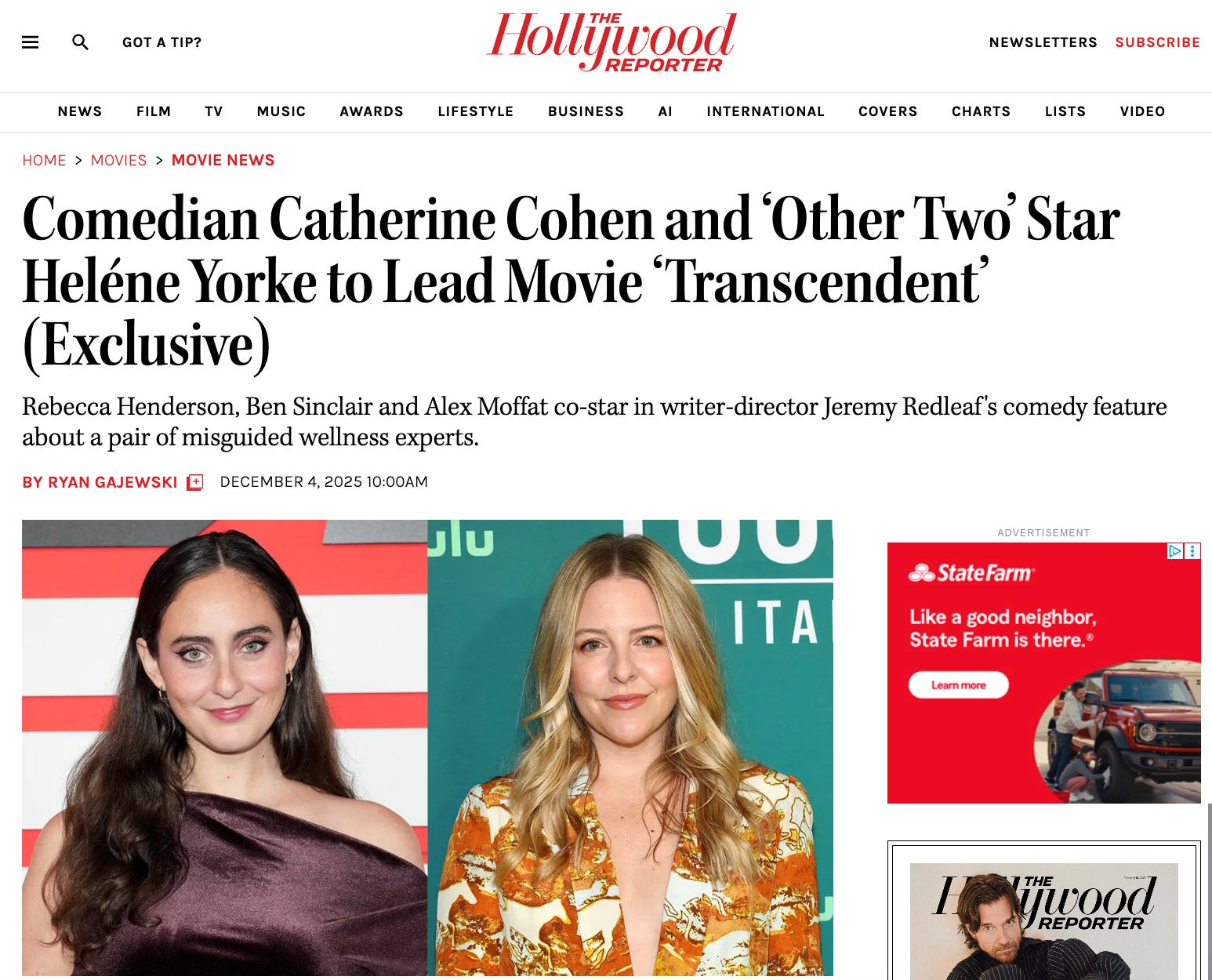
REDLEAF: You saw it in my newsletter, reached out, and ended up doing it. And we ended up being in Tucson, Arizona the same day and met up. And you shared something about your life that you were exploring, and that sent me down a path of exploration that led to this movie. Lots of serendipity.
And it was the first time I really was like — I will find a way. In the past, I would start that way: “Hey, I got this great project, you should get on board, you should fund it.” And if people said “Cool,” we’d do it. But this was the first time when there were a lot of nos, a lot of times where I had to rescue it from somebody who said yes but then didn’t do anything. And I was relentless in a way that was new. I found literally the one way to do it. There were so many ways to not do it, but I found the one way to just barely do it.
CALDWELL: There you go.
REDLEAF: And it was the hardest thing I’ve ever done. It was a blast but I thought it was gonna be a lot easier.
CALDWELL: Why — because of the experience on 3rd Street Blackout?
REDLEAF: Yeah, like — I’ve done this before, I know the shape, I’ve done this budget size before. I’m a deeper, smarter, wiser person now. I just assumed all those things would conspire to make it smoother.
CALDWELL: What was hard about it?
REDLEAF: Days, money, page counts, coverage — all the classic stuff. But I think being away from home is tough. Feeling more responsible for people. You’re a little more like a family when you’re living together in the woods. We had a chef cooking for us, and towards the end of week one, people started to get pretty low. That was challenging — okay, what are we gonna do to change the vibe?
CALDWELL: Was it weather? People not getting along? What was contributing to that?
REDLEAF: A lot of different things. It was a real fight just to get coverage every day. Truly a 12-hour battle just to literally get enough coverage to cut the movie.
CALDWELL: Was that because of how you were staging and trying to cover scenes? Did you plan for more coverage than you needed?
REDLEAF: There were just some long scenes, and I should have been more diligent about cutting back. Our page counts were just high.
CALDWELL: What was the page count?
REDLEAF: We were doing seven to nine pages a day. And it’s a comedy, so there are certain things you just have to get. I thought 15 days at that page count would be different than it was, and then it became clear a little too late — oh no, this is gonna be a battle. We had to throw a second camera on some days just to get it. It was a failure of scoping. And maybe if I was shooting all the time, I would’ve been more tuned into that. I was definitely blindsided by it.
And because I’d fought so hard to make this happen, I felt more responsible for everyone’s experience — the quality of it, all of it. A movie is the best way to see your blind spots. They just get shoved in your face. There was a lot of that. And also — I found this time, maybe because it was my first solo feature — people really want you to be a certain way on set. There’s a reason why there are so many directors where people say, “He’s crazy, but he’s a genius.” I think sets want that kind of leader.
CALDWELL: How do you approach directing?
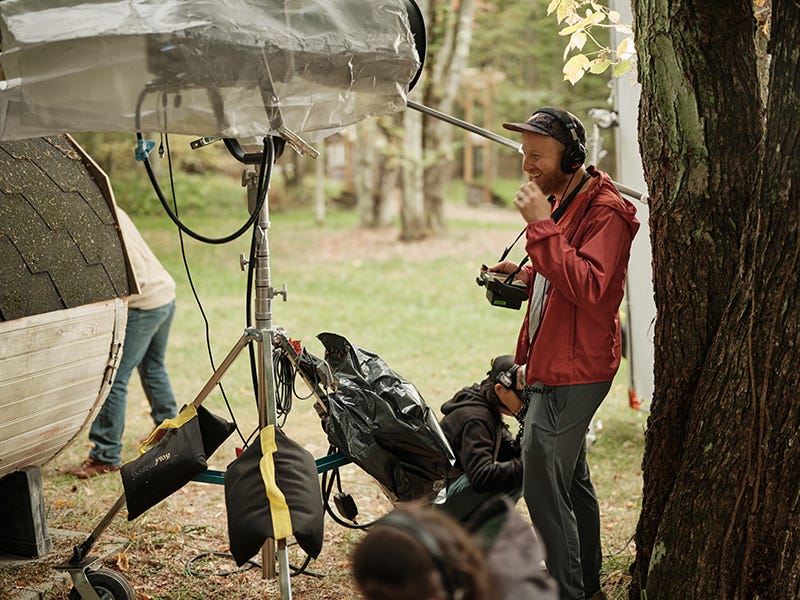
REDLEAF: I heard someone say — mother, father, sister, brother, child — you’re going between roles. I definitely err toward a nurturing environment. I care a lot about vibes and energy on set. I do a lot of things with people in circles and I want everyone to shine. I want to trust my people, be open to spontaneity. I try to create a really safe space for everybody. And I just assume I have no idea what I don’t know yet, so I’m fishing.
CALDWELL: Right.
REDLEAF: Like, I don’t know why we need this, but we should get everyone looking at their phone and also not looking at their phone.
CALDWELL: And they ask “Where is this in the script?” And you’re like, “I don’t know, we’re just gonna get it.”
REDLEAF: Yeah. How would you describe the way you direct these days?
CALDWELL: I feel very confident and comfortable — very much like, this is what we’re doing. I always leave it open; I know when to ask a question, I know when to say, “well, what do you think?” But I really embrace being the leader. Everybody’s looking at me, I’m in charge, and being in charge might mean saying, “well, what do you want to do?” Because at the end of the day, it rests on me. I was thinking about this on my last movie — if any decision were ever questioned, I’d say: because I’ve gotta live with those decisions for another couple months. Not getting something is gonna be me living with that. You’re onto another movie as a producer or line producer or whatever.
But I also always want people to enjoy the process. Life is too short for it to be a miserable experience. And I believe the crew will follow me if I show myself to be a certain type of person and lead with that energy. Yeah, it’s late — but I’m right there, always leading with energy and excitement and the fun of what we’re doing. And I think that brings people along, because they go, “Okay, I’ll follow this guy.”
We’re having a good time and getting good work done. He’s not a screamer. The only time I get really pissed off was when people were talking during a take. That will make me livid — first of all, you’re on a film crew, you should know you don’t talk on set. Second, it’s so disrespectful. We’ve given you the space to do your work, and once the actors step on set, you’re not giving them the respect.
Otherwise, I go to the crew early on and say, “Let me make your lives easier.” Department heads will read the script, go off, and come back with unrelated questions. So I tell them: we don’t have a lot of money or time, here’s what matters, here’s what doesn’t. I remember our stunt coordinator came up and said “The script says this,” and I told him to ignore the script — what’s the easiest thing that still achieves the same objective? The script is just a placeholder we invented two months ago before dealing with real-world consequences. Check with me first, not the script, because even in my head things have changed.
So, being really enthusiastic, excited, treating this as the best job in the world — that’s my approach. And I like to shoot, and my prep is very extensive.
REDLEAF: People always say directing is lonely and I never resonated with that until this movie. Do you feel alone in it?
CALDWELL: I’m a very field-independent person. To quote De Niro in Heat: “I am alone, but I’m not lonely.” I enjoy the communal aspect of filmmaking and the intimacy it creates. Early in my career making shorts, I’d feel that absence hard when you wrapped — you got close to people and then you’re left alone with the footage. That’s mellowed as it’s happened more, and probably will for you, too. You just get used to the post-movie blues. I’ve shifted to enjoying it for what it is — it’s a great time to come together, and some of these people I’ll see on the next film.
It’s also easier when you come home and your wife and kids are there and you’re slipping right back into regular life. You’re like, okay, I got this nice little vacation to go make something and I’ll get to do it again. There is an element of it all being on your shoulders and having to make those final decisions, but I’ve gotten to a place where I’m used to that.
REDLEAF: I wouldn’t say I felt lonely exactly — I felt the need to isolate myself to stay focused, to not absorb the massive amount of energy on set, but also recognized that everyone wanted me to be in that leading mode, a step ahead. It was interesting to feel both of those things. All of my advisors were remote, so maybe it would’ve felt different if some of my mentors were there. It’s definitely like going to war.
CALDWELL: What’s comforting to me is the partnership that gets created between myself, the AD, and the DP. On this last movie — you remember Paul Niccolls? He shot everything in the first half of my career but we hadn’t worked on a feature yet. This time I called and said would you come do this, and he said yeah. Funny enough, if you listen to the edit, at the end of every take you hear me go, “Are we good, Paul?” I do it with Eve [Cohen], too. Really leaning on my DP as another eye — do we have it, do you think we’re missing something? A lot of times Paul and I would have a plan to get something in a oner, and then we’d know to get another shot or two for coverage. At the end of the oner, I’d look at him and say, “do you think we need the other shot?” He’d say, “I don’t think we do, it works as the one-er.” And you go, great, let’s move on.
I would find that very difficult with a DP I hadn’t worked with before. That trust wouldn’t be there. I really lean into that — I trust this person’s set of eyes creatively, and I’m going to lean on them as a shared experience to make sure we have what we need.
REDLEAF: Let’s talk about post-production. Where would you say you’re at?
CALDWELL: I’m in the process of editing — maybe a second rough cut or a fine cut. I’ve done the assembly, done a rough cut, and now I’m going through it again. Nobody’s seen anything, except I shared the first 30 minutes with our composer so he can start working. I decided on this one to edit it myself — it’s low enough budget, it’s non-union so I can’t go to my previous editor, and he’s in LA anyway. I’ve always edited on my movies even when I had an editor, always taken it over for the final cut. I was never somebody who could just sit on a couch and give notes, because a lot of times what makes movies work is the frame-f**king — really making sure the cuts work and the rhythm. I’ve seen my stuff assembled not the way I intended and it just doesn’t work.
I never really wanted to tackle the assembly myself before because it’s always been really difficult — as a writer, I don’t like writing from a blank page, I like to rewrite. But what maybe allowed me to do it this time is we were very efficient with coverage, didn’t do tons of takes, and a lot of the scenes are one-ers so there’s not a lot of editing to do. I thought maybe I can put this together fairly quickly, and I think it’s come together. I’m trying to wrap it up this week to show the producers.
At the same time, it’s interesting because it’s a genre film — a thriller with horror elements and some questionable supernatural stuff going on. What I mean is it’s not definitely supernatural, but definitely questionable. I’m not a horror director, so I’m looking at it going, is this scary? I don’t know — it seems stupid to me. I’m also not really scared by movies, so I don’t know. Are horror movies scary anymore, other than a jump scare that really surprises you? Is stuff scary the way it used to be with Texas Chainsaw or The Exorcist? That’s the one lens I don’t have, that I’m curious to get feedback on — in a way that on other movies, I was pretty confident about what it was. We may even bring somebody on to do a polish if we feel it necessary.
REDLEAF: Neither of us went to capital-F Film School, and I’ve always looked up to you as someone who just figured it out — figured it out in a way where there are a lot of things you seem to become expert enough to feel very confident about. It’s interesting to experience you at an earlier stage with this. At some point, you’ll probably know exactly what you believe about horror and thriller. But that’s been very much the process for me — every project, I’m filling in a new gap. We’re interviewing composers right now and I’m still trying to figure out what makes a good composer, how to talk about music in a way that makes sense to both of us. I’m learning as I go, operating totally from instinct and intuition. It can be uncomfortable, but it’s also exciting. If there’s no part of a project where you’re like “I have no sense of this,” it’s probably gonna feel stale.
CALDWELL: Even with this I’m pretty confident in it — I just don’t have the experience to measure whether it’s hitting the way I want it to. Which is also hard because I’m not seeing it fresh anymore. The thing that becomes the scare to me is not a scare anymore, and I see all the issues. Same with continuity — when you’re editing, you see every continuity problem and think “Oh my God, everybody’s gonna see this.” Then you watch any movie and you notice continuity error after continuity error, but nobody’s paying attention.
I don’t tend to watch movies when I’m shooting, mostly because I don’t have time. But I’ve started watching a lot of movies in post — not even horror movies, just movies. Because I’m mired in the idea of is this gonna cut and match and work, and I’m watching movies where those problems are plentiful. And you go, oh, I can get away with that.
REDLEAF: There’s that One Battle After Another meme where there’s just no lighting continuity.
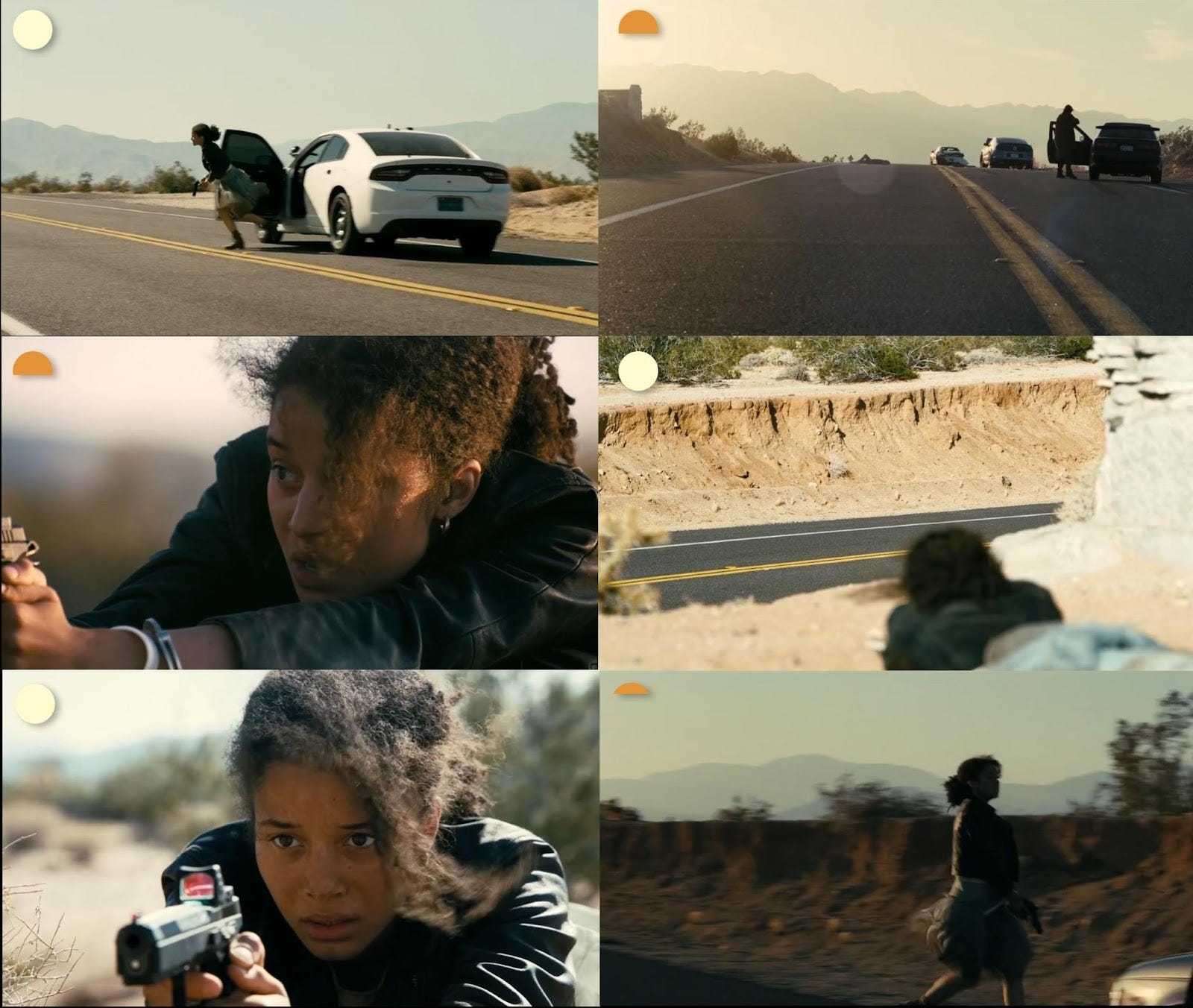
CALDWELL: Even in the car chases, the sun is all over the place.
REDLEAF: We did a tow dolly for a car scene, and there are some lighting continuity issues. We just had our first feedback screening and someone said the car ride felt “discordant.” Which worked for the scene — the lighting is completely different between the two angles, but if it works for what we’re trying to make them feel, that kind of works.
CALDWELL: That’s what you can’t discount. I saw something on Instagram today — two shots from a James Bond movie, Daniel Craig and Eva Green, both overs, and in each angle the person you’re focused on is backlit while the other is clearly in sun. You’re like, this shouldn’t work. But what you can’t discount is that audiences are reacting emotionally. They don’t have time to react logically.
I always have to remind myself when I watch my movie for the 50th time and I’m going “this is so slow” — 98%, 99% of your audience will not watch it 50 times. Their first experience, they’re just being moved along. The assumption we all make is that somebody’s going to come in and really analyze it like they do The Godfather, frame by frame. Nobody does that. As a director, you are not the audience anymore. You don’t have that first-time experience.
The classic example: you get deep in the edit and producers say “Can we pace it up?” And you’re like hang on — because you’re seeing this for the tenth time and naturally it’s gonna feel slow. But audiences are experiencing it for the first time. With Mending the Line, that was a very challenging edit — we had all these different storylines and had to cut out about 20-30 minutes of a storyline that ran through it. I had to really massage it. I got to a point where I cut a version that felt really cut to the bone, and some producers were like “Oh, it’s not bad.” I said, hang on — we know what’s missing. Our minds are filling in what we know isn’t there. It’s not as thin as you think it is, but it is really thin to an audience that doesn’t have all that information.
That’s what’s interesting about editing — it’s such a process of constant reorientation, making sure you’re not negatively impacting the film.
REDLEAF: You have to get really good at understanding people’s filters, and your own, and the things people can’t see in themselves unless they’re looking for it.
CALDWELL: The thing I haven’t gotten to yet but I’m curious about — when you hear people say they had a note about a scene, but realized the problem was actually five scenes before it. I think Soderbergh talked about that. I don’t even know how to register that yet.
REDLEAF: There’s an element of that in our movie. I think sometimes you see a quote at the top of a movie and you’re either half paying attention, or you realize there’s a real function to it — it tells you how to watch, like an investigator. The right quote can be like, this is how I should be understanding these people. I’ve been playing around with that. So the right quote can really frame the whole experience.
CALDWELL: I’ll do that in the script stage — put quotes on the second page for the cast and crew. I’ve never really thought about doing it for the movie itself. But it’s a way of instantly framing what they’re about to see so they don’t have to try and build that frame while watching.
REDLEAF: It’s powerful but can be overused.
CALDWELL: Are you working with an editor?
REDLEAF: We hired an editor — she’s been amazing, the most delightful collaboration I’ve ever had in that role. I knew I needed somebody; I was so close to it and so wrapped up in it. It was a really difficult shoot, which always makes it harder. The first time I watched the assembly I cried — just like, oh my God we survived that, I’m so glad we kept that. Really cathartic in a way it wouldn’t have been if I’d cut it myself.
We just had an intense period where I got to be in person with her every day, had a ball, lots of high fives, lots of inventions that were really exciting. The first cut came in super long — the script was about 100 pages but the cut came in at 2:20. We had to cut to the bone, then realized we cut too much. We found a sweet spot — it’s currently 1:49. Then I got paranoid about length, looking at every film’s runtime. But it’s really just whatever length doesn’t drag; there are no rules these days.
She had to step off to cut a TV show, so I’m in this phase now where Avid is not my system — I’m a Premiere guy — but I’m getting better, teaching myself via YouTube tutorials to a point where I’m hitting keys and not even thinking about it, moving at the speed of my brain. Almost there. So the next phase is taking my pass, then coming back with her on nights and weekends.
We just screened it for the first time, which was a big deal. The first test is: is the core of the thing working? Do people get on board with the characters? If the answer is no, then post just got a lot longer. But if you pass that test, you’re like, okay, now we’re just making the best version of this. Luckily we passed — the core seems to be working. But beginnings are tough, so we’re definitely trying to figure out how to maximize those early scenes, vis-à-vis quotes and reorgs and thinking about the minimum people need to know to launch into the story.
CALDWELL: How do you feel about it?
REDLEAF: I feel proud. We’re two guys who have movies in post right now — that’s not where most people are — and it feels like a real privilege and joy to have gotten to make something. I’ll walk down the street and laugh thinking about it, like I can’t believe we pulled that off. There’s a lot of joy and pride, but also devotion — I know this movie’s not for everyone, but for the person it is for, I want it to be the most potent hour and 49 minutes.
It’s also a funny time to be in post — I’ve joked with our post team that if we just wait three more months we’ll probably be able to fix anything with AI. All these tools are getting better and better at extracting things that shouldn’t be there.
CALDWELL: I’m curious if you’ve found this — when you talk about fixing things and stuff that just feels off, and then you go back and look at movies from the ‘90s and early 2000s, and scenes just end. They don’t resolve, they just jump to the next day. And it works. How jarring can certain things be and audiences will still accept it, as opposed to covering every little narrative detail?
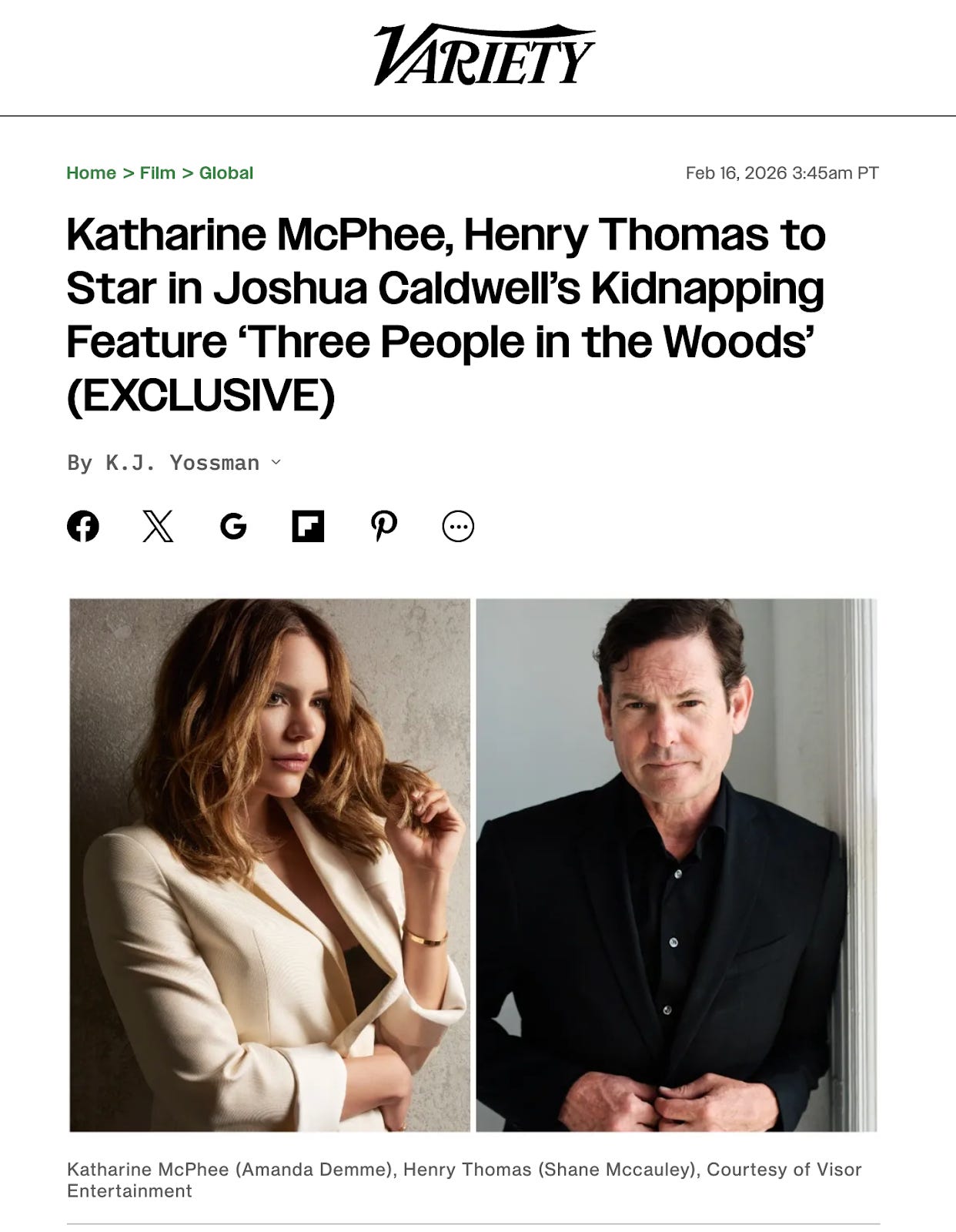
I kind of find that with Three People — it’s basically 72 hours, really linear, no B story or C story, just this couple. You sort of go, “How much of the narrative really needs to be covered? How much do I actually have to explain versus it’s okay if it cuts to the next day?” Again, maybe I’m reading it as if people are going to analyze it, and I don’t think anybody will. What works for just the flow of it?
Maybe back when those movies came out in theaters and hit VHS, there just wasn’t an expectation of re-watchability that high. I’m probably overthinking what I can get away with.
REDLEAF: We had a big anxiety about things we had to cut towards the end — scenes that filled in more color about characters’ pasts. Like, she’s sober — don’t they need to know everything about her drug of choice, the whys and hows? Or someone’s getting kicked out of their apartment — don’t we need to see it? But what I got from the test screening was: as long as they buy it as “that seems right for the character,” it’s okay. If it doesn’t bump as inconsistent with the character, there’s a lot of latitude.
I just watched that new Bradley Cooper movie — Is This Thing On? — about a marriage dissolving, and you don’t know almost anything about the marriage until the end. But you’re rooting for them, you care. In some way it doesn’t matter. There’s a lot more latitude than we think in our most anxious moments.
CALDWELL: I’ve really come to a place of being more forgiving of myself as a filmmaker working on tight budgets and schedules. We put a lot of effort into logic, continuity, making sure everything works. But for 98%, 99% of the audience, they’re going to either say I liked it or I didn’t. As a filmmaker, I watch movies with interest and depth and a desire to analyze them, but most people don’t watch that way. It comes down to: do I like this movie or not? As long as the whole adds up to something — and maybe you don’t want them to like it, maybe that’s the intention — it gives you a lot of forgiveness on the other stuff.
With Infamous, I find it to be technically exactly what I wanted — the performances, the story, the way I shot it, I’m happy with the scenes, I think I did a great job putting that movie together. But a lot of people hated it. Mending the Line I have a lot of issues with — how I shot certain things, decisions I made, difficulties in editing around that half hour I had to cut, transitions that still just don’t work. And yet it went to number one on Netflix, got great reviews, and people have had their lives changed by it. Literally people have seen that movie and signed up for Project Healing Waters and it’s helped them immensely.
It made me realize — all this stuff I’m focused on, this edit that feels so obvious to me, people don’t register it. Even if it bumps for them, they’re right onto the next thing. By the end they go, I liked that movie, or I really didn’t. That’s really what it is. Everything else is for critics and cinema buffs who frankly probably aren’t going to give any attention to my film anyway.
REDLEAF: But if they do, let’s hope they say good things. It’s funny — there’s something ineffable about what makes these things work, which is exciting and maddening. I was going to say it doesn’t even matter whether they liked it or didn’t. I think about my son who’s three and how he watches things — just trying to learn about the world, putting himself in scenarios he hasn’t been in. From a brain perspective, we’re learning how to encounter different parts of human experience, either so we know how to navigate it or so we have more empathy for others. There’s a function to it. Even if someone felt something and didn’t like how they felt, but it was a new world or a new kind of character — that’s still a thing.
CALDWELL: I was referring more to the idea that there’s an overall response that’s more about the sum than the parts. Even if a scene doesn’t work, if it looks like shit, that rarely overcomes the overall impression of the film. Was this worth an hour and a half or not?
REDLEAF: That makes me think there should be a panel of filmmakers you can turn to when you have these anxieties — people who’ll tell you: this is an issue, this is an issue, this is not an issue. Here’s exhibit A, B, and C.
CALDWELL: Exactly. “We might want to look at addressing that one.”
REDLEAF: How are you thinking about the NonDē world right now? You’ve been really passionate about it and then you went off and made a bigger movie right away — where are you approaching things from here?
CALDWELL: I’m just trying to leverage where I think it’s worth leveraging. A lot of what I’ve been hearing is that the shifting paradigm of independent filmmaking is changing. I think I’m positioned pretty well because budgets are getting lower. The idea of a $2 million movie making its money back is really, really tough right now — and that’s hardly anything. When you get super low budget it means you can’t shoot union, can’t really pay people what they should be paid. But the market is not willing to support movies of that size.
I have a good thing with this producer-financier on Three People — I’ve demonstrated my ability to come in on time and on budget, and be a great person to work with. Not a jerk, not a screamer, not entitled. I want to be an easy guy to work with. Artistic integrity is not really helpful if you don’t have anything to practice it on because nobody wants to work with you.
I’d like to do another one this year — trying to figure out a script that would work. I want to hit some singles. I definitely don’t want to be spending four years between projects. From Mending the Line to now was way too long. I joked with my wife I felt like I was becoming a professional baseball watcher. During that time I kept developing, got very close on a couple things, we were out to cast but just couldn’t make it happen. I turned more attention to brand stuff and documentary work because I had to pay the bills. It never really went away — I just had no outlet. The outlet of a $2-3 million feature had shifted and was no longer available to me.
Moving forward, I just love working. If that means continuing documentaries, carving out space in the fly fishing or outdoor space — I just love having a camera in my hand. I’d like to make movies more frequently, and if it means lower budgets on faster schedules, great. Three years ago if you’d asked me to make Three People I would’ve said no — Mending the Line was going to take me to that next level. It didn’t. I’d just like to work. So I’m in development on a bunch of things, and my goal is to mount another film in the fall.
REDLEAF: I’ll look forward to that next chapter. We’ll have another chat when we’re both in post again.
CALDWELL: What about you — are you focused on this, or thinking about what’s next?
REDLEAF: I just got to guest direct on Brooklyn Coffee Shop — a very popular vertical series. It was a blast to go into someone else’s world.
CALDWELL: What do you actually do as a director on that?
REDLEAF: I was pitching lines, we were inventing stuff, cutting stuff. They only have the coffee shop for so long — they shoot one side before the sun goes down and one side after, almost block-shooting it. I did four episodes in one day. It moved so quickly. My last movie was actually great training for it — I knew how to get it in the can in one take if needed. And then it’s like, we shot the other side hours ago, so how do we match that, how do we invent on top of it? There’s definitely directing happening. But yeah, I started in web series and these guys are sort of the next version of that. Everyone used to be desperate to get out of that space, but these guys aren’t — they’re making branded deals that are sustainable, and the branded episodes pay for the non-branded ones. Cool to be in that world.
I’ve been toying around with ideas. I’m really interested in ways to speed up the process. I did four workshops over many years on this movie, but what if we went away for three days? Or Mike Leigh-style — set up a scenario, film it in real time, and that becomes half the script. Thinking about interesting ways to iterate on that process.
It always feels like the world is going to get 30% worse and therefore making our movies will get 30% harder. I have to watch myself — watch my spirit and my willingness to dream and hope. This business model is troubled and there are no signs it’s getting better anytime soon. And yet we love movies and love doing this. There’s a belief that there are enough of us out there to make whatever next version of this sustainable.
I met a bunch of young kids on this film who are not jaded, haven’t had those ups and downs — they’re just jazzed to make stuff and will show up for 200 bucks in 30-degree weather. New York kind of lost its indie cred for a while, but there’s some energy around people who want to do things. We’ll see where it goes.
CALDWELL: I’m trying to think of how to create more — how do I collapse the process? You said move faster, make features quicker. Can I shoot a feature in 10 days? I don’t really have any trouble with that. I just need the script, and I need it to not require a million-dollar budget. Something I can do fast and on my own, coming back to Soderbergh and his approach.
I’ve been thinking of ideas in the realm of a $20,000 or $100,000 feature that I know I could get funding for. Because I think in the total sum of my directing career, I’ve probably spent 120-130 days on set in 10 years — which is probably a lot for most people, but it’s about 1% of those 10 years. The more you can be doing it, you stay sharper. You’re riding a bike constantly rather than having to pick it up every three years.
With the NonDē world — I have some issues on the distribution side that don’t seem right to me — but from the idea perspective, what I subscribe to is similar to Layover: make the version as inexpensively as possible, go do it. I want to do more of that. The trouble is I need the material. Do I need a fully fleshed-out script, or do I do the outline thing — not improv, but more discovered, because we’re shooting for no money? I’m interested in experimenting more, especially in the world of drama and portraiture — less focused on narrative, more on a portrait of a person or character in their experience. And I really, really want to shoot something in New York City. I have an idea I’m actually talking with somebody about tomorrow.
REDLEAF: Come on down — I know some great cone guys. You hire them to go throw the cones out at four in the morning, and these guys make a killing.
CALDWELL: I’m sure they do.
REDLEAF: Like the movies from the ‘80s you referenced — I feel like we can just have this end.
CALDWELL: Yeah, exactly. And scene!
Jeremy Redleaf is an Emmy award-winning filmmaker and entrepreneur. He first emerged in the early class of internet creators with his breakthrough web series, Odd Jobs, starring Alexandra Daddario which won The Streamy Awards for Best New Web Series and Best Writing at the International Television Festival, the jury prize at the NY Television Festival, and a development deal at Fox Television Studios. A multi-disciplinary artist, Jeremy’s work spans immersive experiences, art installations, commercials, branded content, television projects like Billy Eichner’s Billy on the Street, and comedy specials for SYFY. He co-wrote, co-directed, produced, and starred in the feature film 3rd Street Blackout co-starring Negin Farsad, Janeane Garofalo, John Hodgman and Sasheer Zamata that premiered at LA Film Festival, enjoyed a theatrical release, and is now available to stream on Peacock. Most recently, he wrote and directed the feature film Transcendent, currently in post-production. Jeremy is also the co-founder of Caveday, a global community for focused work that counts members in 50 countries including Emmy, Oscar, and Pulitzer winners and was recently named a “World Changing Idea” by Fast Company.
Joshua Caldwell is a director, writer, producer, and MTV Movie Award winner whose debut feature, Layover—a French-language film made for $6,000—premiered at the 2014 Seattle International Film Festival and earned a FIPRESCI New American Cinema Award nomination while drawing critical praise as “a moving, wistful film” (/Film) and “a beautiful antidote for big budget fatigue” (Film School Rejects). He went on to write and direct Infamous, starring Bella Thorne, which debuted as the #1 new movie in America and was described as “perversely fascinating” (Variety) and “a thrilling crime drama” (ScreenRant). His 2023 feature Mending the Line, starring Brian Cox, Sinqua Walls, Perry Mattfeld, Patricia Heaton, and Wes Studi, became a critical favorite—called a “stirring tale of remedy and redemption” (Los Angeles Times)—and reached #1 on Netflix’s U.S. Top Ten upon its release. Most recently, he directed Three People in the Woods, a contained psychological horror-thriller starring Katharine McPhee, Henry Thomas, and Jim Gaffigan, continuing his exploration of grief, morality, and irreversible choices.
 | A guest post by
|
 | A guest post by
|